
The Story
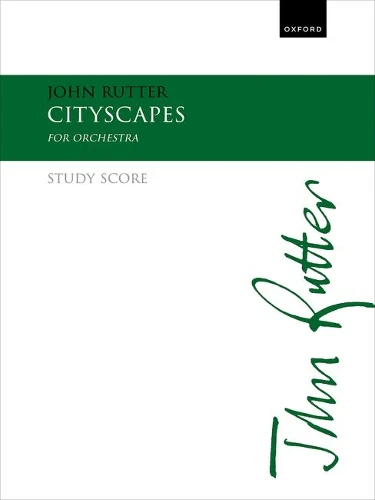
for orchestra Originally published in 1976 as Partita for Orchestra, this refreshed version enriches the enduringly popular piece with programmatic titles. Through evocative portraits - 'Big Apple' (New York), 'Lost City', and 'Flower of Cities All' (London) - Rutter imagines the stories of places and people in his own distinctive style.
for orchestra In this refreshed version of the enduringly popular Partita for Orchestra (1976), the composer reimagines the original work by assigning new programmatic titles to the piece and its individual movements. The trio of cityscapes opens with 'Big Apple', evoking New York's spirit of innovation and its bustling soundscape, where echoes of Gershwin can be heard. The second movement, 'Lost City', maintains a mysterious and atmospheric tone, conjuring the mythical Atlantis more than any modern metropolis. The piece concludes with a musical portrait of London, described by William Dunbar in his 16th-century poem as the 'Flower of Cities All'. This final movement paints a vivid picture of the capital's busy arteries, squares, and imposing architecture, interwoven with impressions of its quieter neighbourhoods.
Description
for orchestra Originally published in 1976 as Partita for Orchestra, this refreshed version enriches the enduringly popular piece with programmatic titles. Through evocative portraits - 'Big Apple' (New York), 'Lost City', and 'Flower of Cities All' (London) - Rutter imagines the stories of places and people in his own distinctive style.
for orchestra In this refreshed version of the enduringly popular Partita for Orchestra (1976), the composer reimagines the original work by assigning new programmatic titles to the piece and its individual movements. The trio of cityscapes opens with 'Big Apple', evoking New York's spirit of innovation and its bustling soundscape, where echoes of Gershwin can be heard. The second movement, 'Lost City', maintains a mysterious and atmospheric tone, conjuring the mythical Atlantis more than any modern metropolis. The piece concludes with a musical portrait of London, described by William Dunbar in his 16th-century poem as the 'Flower of Cities All'. This final movement paints a vivid picture of the capital's busy arteries, squares, and imposing architecture, interwoven with impressions of its quieter neighbourhoods.