The Story
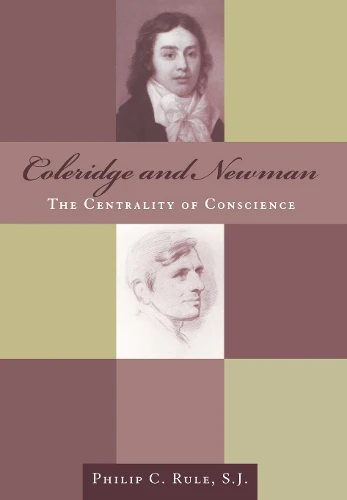
The Centrality of Conscience By examining Samuel Taylor Coleridge's and John Henry Newman's parallel approaches to the central question of Christian apologetics - the existence of God - Coleridge and Newman: The Centrality of Conscience documents more fully than ever before the extent of Coleridge's influence on Newman. Both men sought to develop an argument for God's existence by understanding conscience as the moral self-awareness that makes us human.
Philip Rule offers a close reading of three texts by Coleridge and three by Newman to demonstrate the extent of Coleridge's influence on Newman. He examines their parallel approaches to the central question of Christian apologetics, the existence of God.
The study provides fresh readings of three texts by Colerdige and three by Newman. The result of these comparative readings is a rhetoric that both informs and invites the reader to personal reflection.
Description
The Centrality of Conscience By examining Samuel Taylor Coleridge's and John Henry Newman's parallel approaches to the central question of Christian apologetics - the existence of God - Coleridge and Newman: The Centrality of Conscience documents more fully than ever before the extent of Coleridge's influence on Newman. Both men sought to develop an argument for God's existence by understanding conscience as the moral self-awareness that makes us human.
Philip Rule offers a close reading of three texts by Coleridge and three by Newman to demonstrate the extent of Coleridge's influence on Newman. He examines their parallel approaches to the central question of Christian apologetics, the existence of God.
The study provides fresh readings of three texts by Colerdige and three by Newman. The result of these comparative readings is a rhetoric that both informs and invites the reader to personal reflection.